

We are the Mods! We are the Mods! We are! We are! We are the Mods!
There are Classic button badges that every collector should have and the Mod target is definitely one of them.
The Mod target symbol, often referred to as the “bullseye” or “target,” emerged as a quintessential emblem of the 1960s Mod subculture in London. The symbol, resembling a stylised circular target, represented the Mod’s fascination with modernity, fashion, and individualism. It adorned clothing, scooters, and various accessories, becoming an iconic visual identifier.
The Mod target symbol’s connection to military origins adds a fascinating layer to its adoption by the Mod subculture.
The symbol draws from the British Royal Air Force’s (RAF) roundel, a circular insignia with a central dot used on aircraft during World War I and II. This insignia was employed to help identify British aircraft and distinguish them from enemy planes.
The Mod movement’s affinity for the target symbol can be attributed to several factors. Firstly, the Mod subculture emerged during the 1960s in a post-war era marked by social and cultural shifts. The target’s military connection may have resonated with the desire for a distinct and rebellious identity, while also reflecting a sense of nostalgia for a time when Britain’s role in the world was prominent.
Furthermore, the adoption of the target symbol can be seen as a form of subversion and appropriation. By repurposing a military emblem into a fashion statement, Mods transformed its meaning and imbued it with new cultural significance. This aligns with the Mod movement’s rejection of traditional norms and their embrace of modernity and individualism.
Incorporating military motifs into fashion wasn’t unique to Mods – it had been a recurring trend throughout history, with various youth cultures drawing inspiration from military aesthetics. The Mod target’s military origins, when coupled with its bold visual appeal, likely contributed to its allure and adoption as a powerful emblem of rebellion, style, and identity within the Mod subculture.
Peter Blake and Jasper Johns are two prominent artists who have made significant contributions to the world of modern and contemporary art.
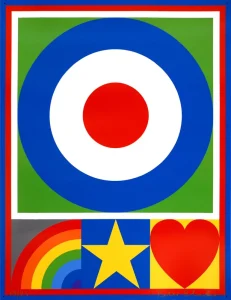
Sir Peter Blake, a British pop artist, is best known for co-creating the iconic album cover for The Beatles’ “Sgt. Pepper’s Lonely Hearts Club Band.” His work often incorporated elements of popular culture, advertising, symbols such as the RAF (Royal Air Force) roundel
and everyday objects, blurring the lines between high and low art. Blake’s use of vibrant colours, collage techniques, and references to pop culture icons have made him a key figure in the Pop Art movement. His art reflects a fascination with consumerism, celebrity, and nostalgia, capturing the essence of the 20th century.
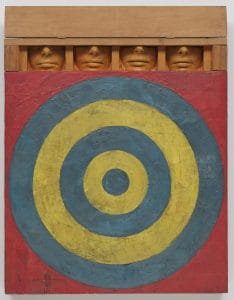
Jasper Johns iconic 1955 target very much relates to the whole idea of the roundel in pop culture
Jasper Johns, an American artist, is celebrated for his role in the development of Pop Art and his exploration of iconic symbols, including the target imagery. He is renowned for his enigmatic paintings of the American flag and other recognizable images, challenging viewers to reconsider familiar symbols and their meanings. Johns often employed techniques like encaustic painting (as seen in image left), collage, and assemblage to create textured and visually engaging artworks. His work is characterized by a deep intellectual inquiry into the nature of representation, perception, and the act of creating art itself.
Both artists have left an indelible mark on the art world, influencing subsequent generations and reshaping artistic expression through their innovative approaches and thought-provoking creations.
During the 1960s, Mods adopted the target as a badge of their rebellious attitude and rejection of traditional norms. It epitomized their affinity for clean-cut aesthetics and innovative music genres like R&B and soul. The Mod target symbol embodied their pursuit of self-expression and urban sophistication, while also embodying a sense of unity within the subculture.
In the 1980s, a revival of Mod culture revitalized the use of the target symbol. As the Mod movement experienced a resurgence, particularly in British music and fashion scenes, the emblem once again became a defining motif. Bands like The Jam and The Who embraced the target, reaffirming its status as an enduring symbol of youth rebellion and style.
Across decades, the Mod target badge symbol transcended it’s origins, symbolizing a timeless fusion of art, music, and countercultural identity. Check out this excellent article over at AnOther “Pin Culture: Why Badges Remain a Powerful Style Statement”, about the cultural significance of badges and why people still wear them.
Be sure to check out our other Mod culture related button badges!


